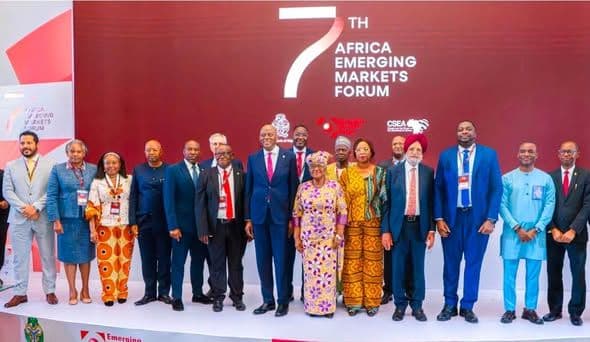


ABUJA — The Governor of the Central Bank of Nigeria (CBN), Olayemi Cardoso, and the Director-General of the World Trade Organization (WTO), Dr. Ngozi Okonjo-Iweala, have called for sustained economic reforms, increased investment and stronger regional cooperation to position Nigeria and Africa on a path of sustainable growth.
The two economic leaders made the call during a policy dialogue at the 7th African Emerging Markets Forum (AEMF 2026) held at the CBN Headquarters in Abuja.
Speaking during the fireside dialogue, Cardoso highlighted the importance of restoring orthodox central banking practices, noting that the reforms undertaken by the CBN had contributed to improved macroeconomic stability, greater transparency in the foreign exchange market and a stronger banking sector.
He said the reforms were also laying the foundation for improved access to finance, particularly for small and medium-sized enterprises (SMEs), stressing that discipline and consistency in policy implementation would be critical to sustaining the gains achieved.
Looking ahead, the CBN Governor urged African countries to move beyond being consumers of technology and become creators of home-grown technological solutions.
According to him, greater investment in reliable electricity, digital infrastructure and affordable connectivity is required to unlock Africa's economic potential. He also emphasised the need to develop a generation of young Africans equipped with the skills required to participate in the rapidly evolving artificial intelligence (AI) economy.
Cardoso further stressed that the full participation of women in economic activities, alongside deeper regional integration, would be indispensable to achieving inclusive and sustainable prosperity across the continent.
On her part, Okonjo-Iweala identified effective leadership, policy implementation and stronger regional cooperation as critical to unlocking Africa's economic opportunities.
She urged African governments to deepen macroeconomic reforms, create sufficient jobs for the continent's growing youth population and attract investment by strengthening governance and institutional frameworks.
The WTO Director-General also called for greater mobilisation of domestic resources and the development of regional value chains capable of transforming Africa's abundant natural resources into higher-value products within the continent.
She stressed the importance of moving away from the traditional model of exporting raw materials and importing finished products, noting that stronger regional value chains would enable African economies to capture more value from their resources and create jobs.
The policy dialogue reinforced a shared vision of an innovative, competitive and resilient Africa, driven by purposeful leadership, sustained reforms and strategic partnerships.
The discussions at AEMF 2026 underscored the need for African countries to translate policy reforms into tangible economic opportunities, strengthen cooperation and build the infrastructure, institutions and human capital required to fully realise the continent's vast economic potential.