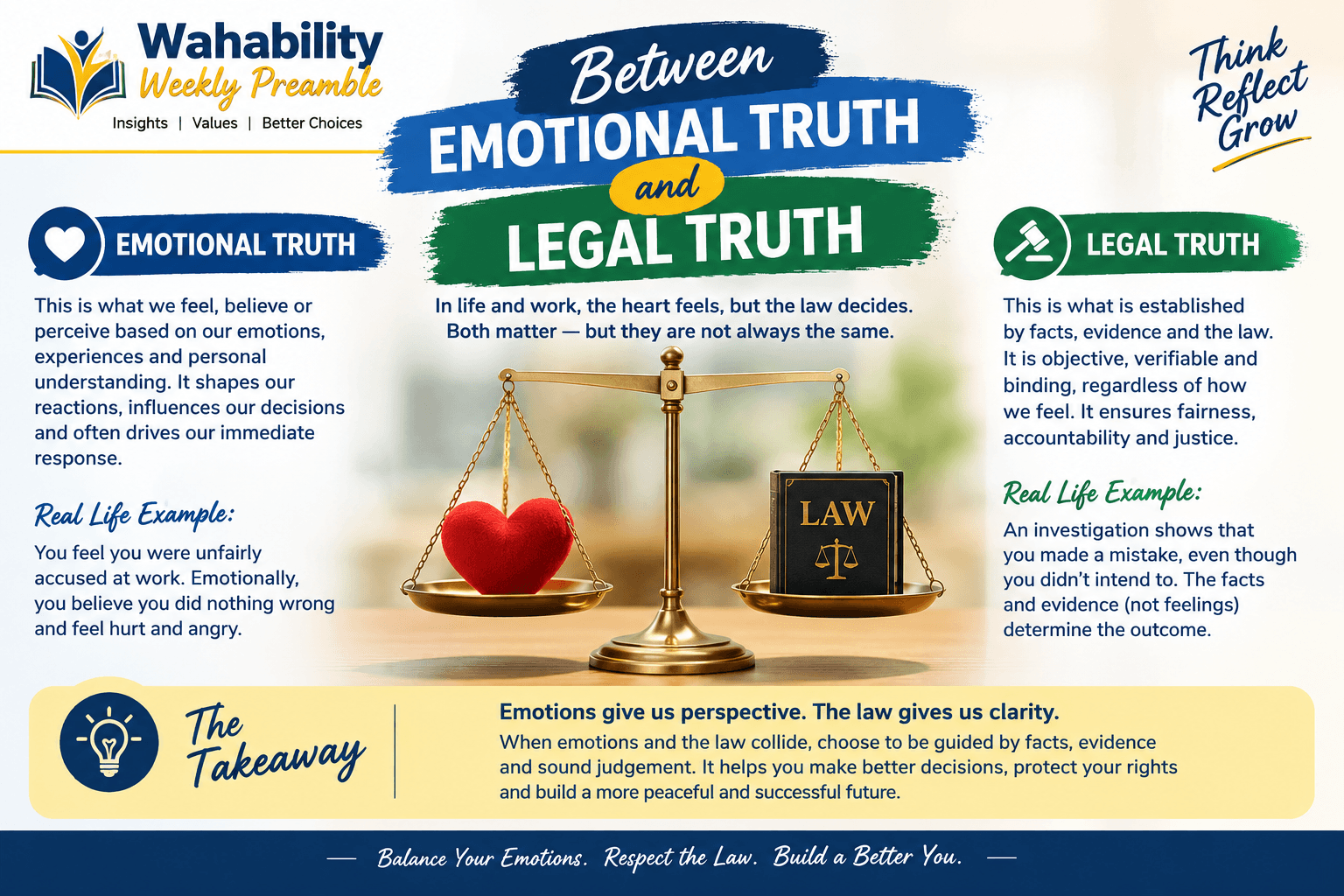
Human life is often lived between two powerful realities: what we feel to be true and what can be proved to be true. This is the difference between emotional truth and legal truth.
Emotional truth is the truth of personal experience. It reflects pain, fear, betrayal, love, disappointment and perception. A person may sincerely say, “I know he cheated me,bbecause every circumstance appears to support that belief. Legal truth, however, is based on evidence that can be established according to accepted rules—documents, witnesses, records and other admissible proof.
Consider a workplace example. An employee may feel deeply convinced that a promotion was denied because of personal hatred by a supervisor. The emotional truth may be genuine because the employee experienced hostility and unfair treatment. Yet, before a court or disciplinary panel, the legal question is different: Can the employee prove discrimination or victimisation with credible evidence? Emails, performance records and witness testimony may determine the legal truth.
A common life experience is marital conflict. A spouse may emotionally believe that their partner has been unfaithful because of late-night calls, secrecy and changed behaviour. The pain is real. However, suspicion and emotional conviction alone may not establish legal proof in a divorce or criminal proceeding.
The lesson is not that emotional truth is unimportant. On the contrary, emotions reveal the human consequences of events. But justice requires evidence because feelings, however sincere, can sometimes be mistaken.
Emotional truth tells us how an event affected a person; legal truth determines what can be established and acted upon. Wisdom lies in respecting both—showing compassion for human feelings while demanding evidence before passing judgment.