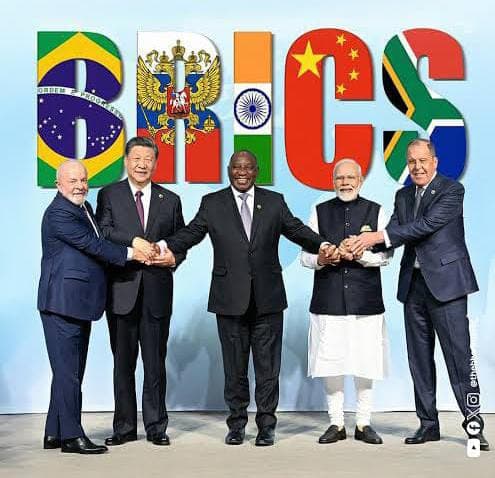
ABUJA, September 1


2, 2026 — The BRICS Summit opened in New Delhi, India, on Saturday with the arrival of major world leaders, including Chinese President Xi Jinping, Russian President Vladimir Putin, South African President Cyril Ramaphosa, Egyptian President Abdel Fattah el-Sisi and Iranian President Masoud Pezeshkian, alongside other leaders and delegations from member countries.
The summit, which comes at a period of increasing global geopolitical and economic realignment, has reinforced BRICS' commitment to building a more inclusive and multipolar international order, while strengthening cooperation among emerging economies and countries of the Global South.
A major economic issue attracting global attention is the bloc's continued effort to improve cross-border payments and reduce dependence on traditional Western-dominated financial infrastructure.
Contrary to claims that BRICS has already launched a complete replacement for the Society for Worldwide Interbank Financial Telecommunication (SWIFT), the resolutions emerging from the summit indicate that the bloc is advancing cooperation among members' payment and messaging systems to make cross-border transactions faster, safer and more cost-effective.
The BRICS Payment Task Force is expected to continue work on improving interoperability among national payment systems, promoting settlements in local currencies and exploring new platforms and financial infrastructure that could strengthen economic transactions among member states. The focus of the New Delhi Declaration is therefore on developing practical alternatives and complementary payment arrangements rather than the immediate introduction of a single BRICS currency or a fully operational replacement for SWIFT.
The summit also adopted the New Delhi Declaration, with leaders calling for greater dialogue and diplomacy in resolving international conflicts, reforms of global governance institutions and resistance to unilateral economic measures and trade barriers that undermine multilateral cooperation.
The development has renewed global interest in the future of the international financial architecture, particularly as BRICS countries expand cooperation in local-currency trade, digital payment infrastructure and financial connectivity.
For many observers, the direction of discussions in New Delhi represents another significant signal that the global economic system is gradually moving towards greater diversification.
While the dominance of existing international payment systems is unlikely to disappear overnight, BRICS' determination to develop stronger cross-border payment links and independent financial mechanisms underscores the growing influence of emerging economies in shaping the future of global commerce.
With BRICS now bringing together some of the world's largest emerging economies and representing a substantial share of the global population and economic output, the New Delhi Summit has further strengthened the argument that the aspiration for a multipolar world order is increasingly becoming a defining feature of contemporary international relations.
The message emerging from the summit is clear: BRICS has not simply announced a finished replacement for SWIFT, but it is steadily building the financial, trade and institutional cooperation that could, over time, provide credible alternatives and reduce dependence on any single global financial system